
Everything You Did to Make Your Conference Better Actually Made it Worse
Lots of the things conferences do are worse than doing nothing.
Read on SubstackGathering a group of high-impact people for a conference or retreat?
I can help.
You spend months planning, and then everything happens in one day. You’ve invited people who matter a lot to you, and the stakes are high.
It’s hard to know where to even start.
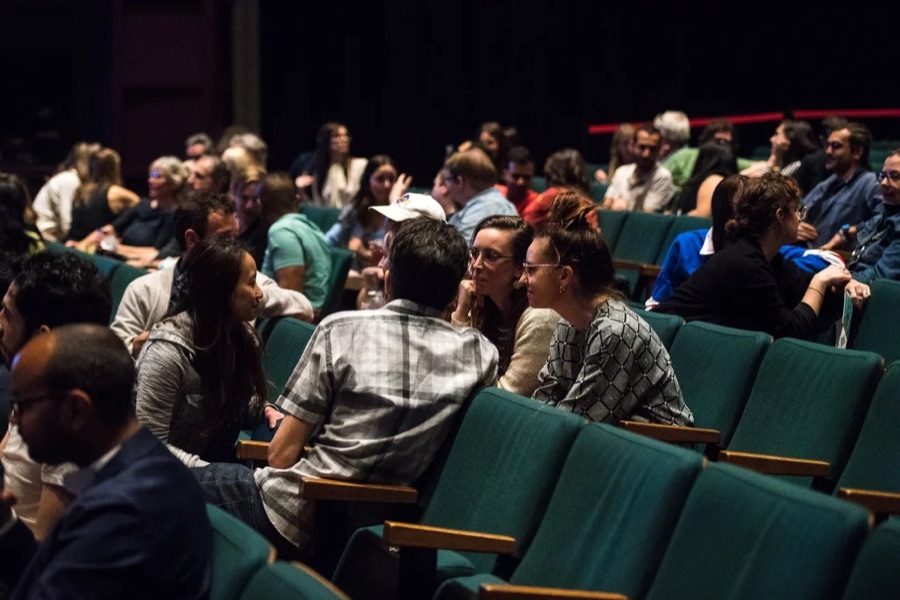
Say you had 200 people in a room and you wanted to stop them from meeting. A great way to do this would be to give one of them a microphone and put the other 199 in chairs.
Most conferences have, as their central goal, some variation of “help people meet each other”. The main activity at the conference is then a big lecture with everyone in one room. The central activity actually prevents the main goal of the conference.
Most conferences are forgettable. Not because the organizers don’t care, but because the default design optimizes for safety, not for impact.
“We had never done an event like this before, and our goals were ambitious…The resulting conference far exceeded my expectations: participants had conversations that were candid, collaborative, and forward-looking. Key to this success was Misha’s experience and counsel with conference design.”

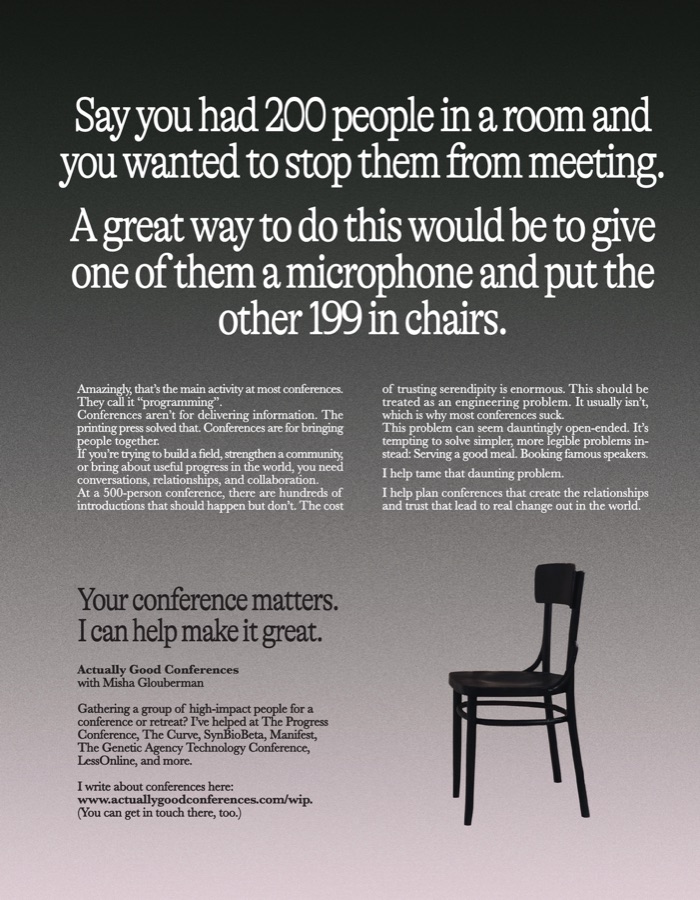
I’ve helped at The Progress Conference, The Curve, SynBioBeta, Manifest, The Genetic Agency Technology Conference, LessOnline, and more.
Clients include Dyno Therapeutics, Charles River Associates, Roots of Progress Institute, Manifest, Edge Esmeralda, Retro Bio, and The Lavin Agency.
I co-wrote a weird, non-businessy book of essays called “The Chairs Are Where The People Go”, which The New Yorker chose as one of their top nonfiction picks the year it came out, and the LA Review of Books said, “should be required reading for Congress”, even though it’s 10% about chairs.
I’m not a meeting planner. A meeting planner’s job is to make sure that nothing goes wrong. That’s not the same as making sure that anything good actually happens.
At a big conference, there are hundreds of introductions that should happen but don’t. The cost of trusting serendipity is enormous.
I engineer the social relationships that arise from your conference, making sure that all the most important conversations and connections happen, instead of leaving them to luck. I help make sure your conference achieves its goals.
I typically work with clients over the course of anywhere from two to twelve months, helping them plan, set goals, and course-correct.
“Misha is one of the smartest people I have ever talked to about event design. He helped Roots of Progress run Zoom gatherings that don’t suck, and he helped create more in-person connections at our Progress Conference. We’re glad to be working with him.”

“We ran a 500 person conference in Berkeley. Misha was amazing: I was in awe of how he got all of our attendees participating and sharing thoughts. I would highly recommend Misha to anyone looking to run a memorable event.”

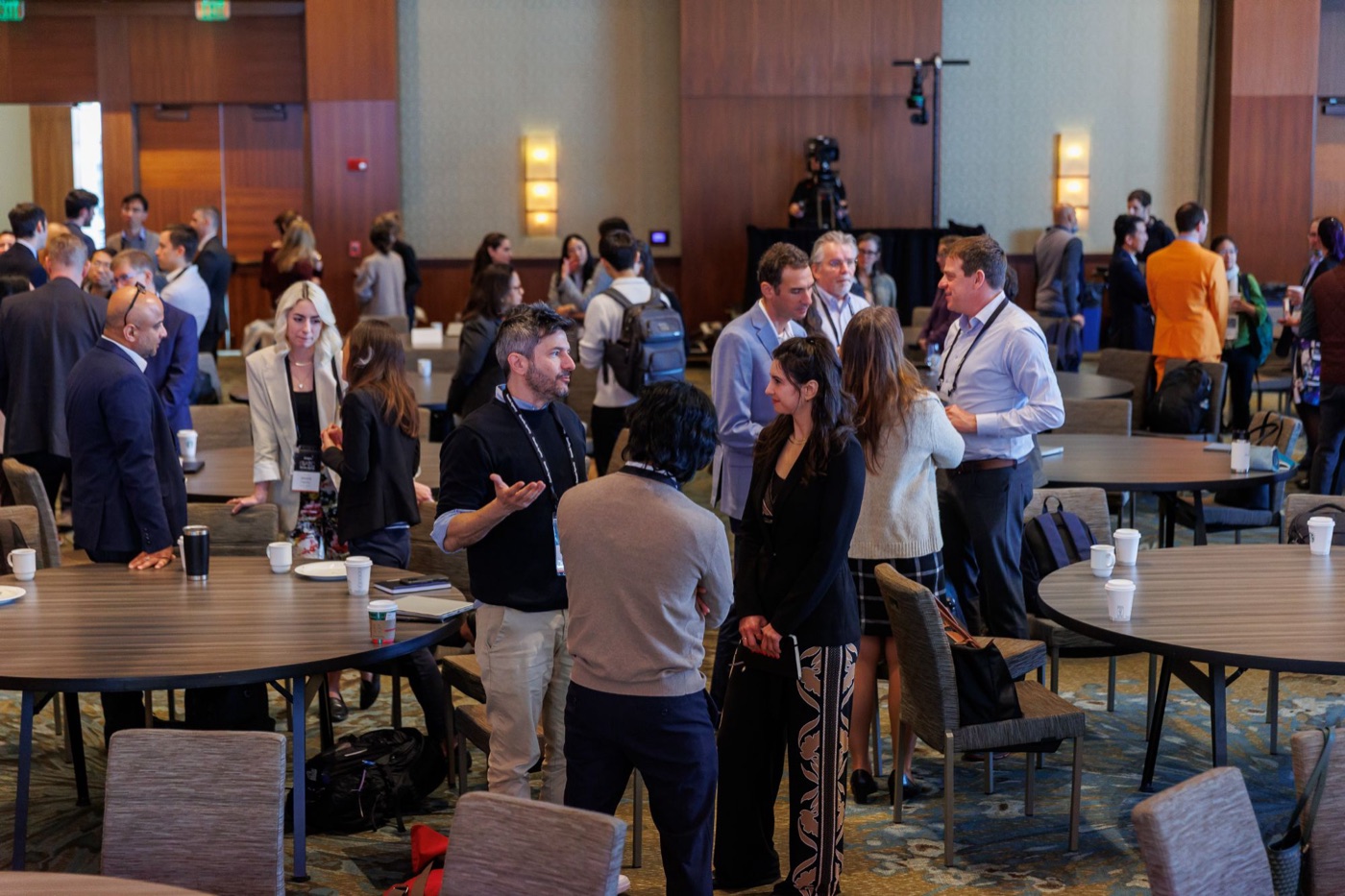
There was a morning session to match people up: Every attendee got a card and wrote down the topic they most wanted to discuss. Then they walked the room, cards in hand, finding others working on the same problems. Within minutes, groups were forming, and the energy in the room completely shifted, before 9:30 am.
I want your conference to be such that everybody leaves not just having met one or two people, but meeting the person who they most needed to meet.
Most of my advice on running conferences boils down to four principles. They are:
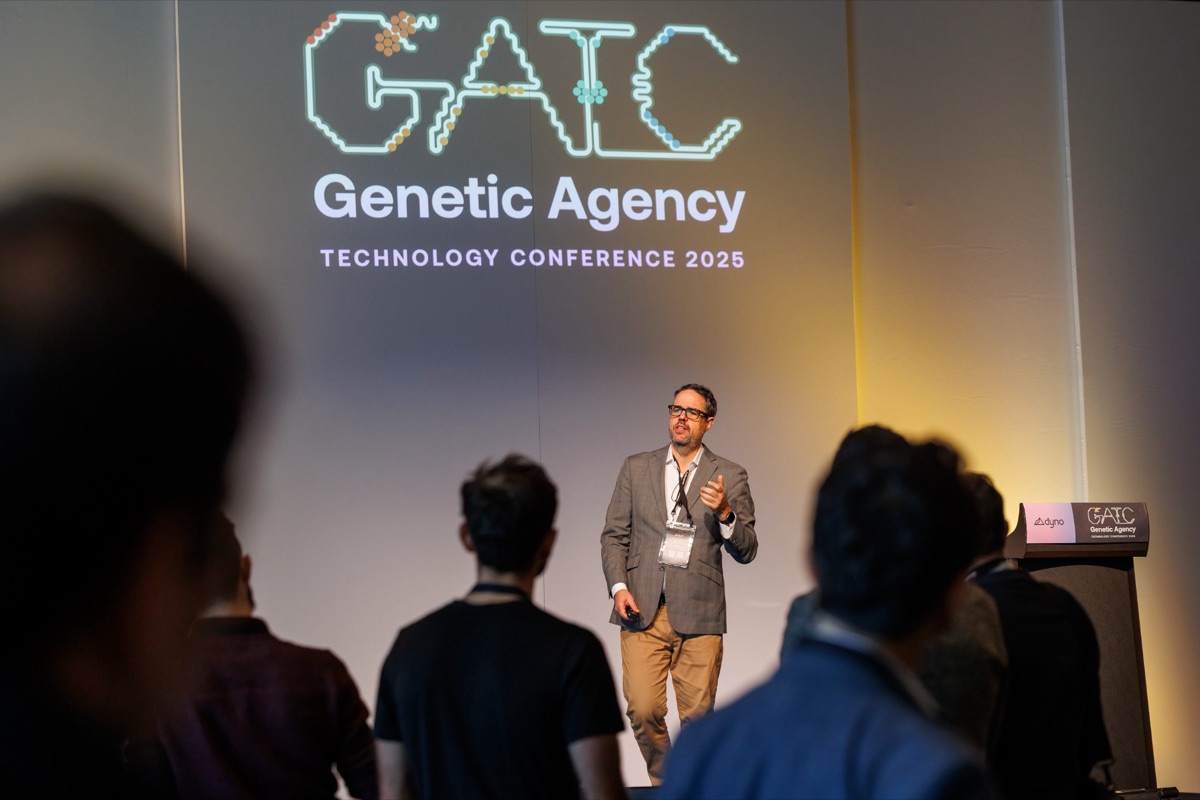
I’ll make sure the real work gets done.
For these events, you need clarity and alignment on goals, a well-designed work process, and mechanisms to ensure follow-up on decisions.
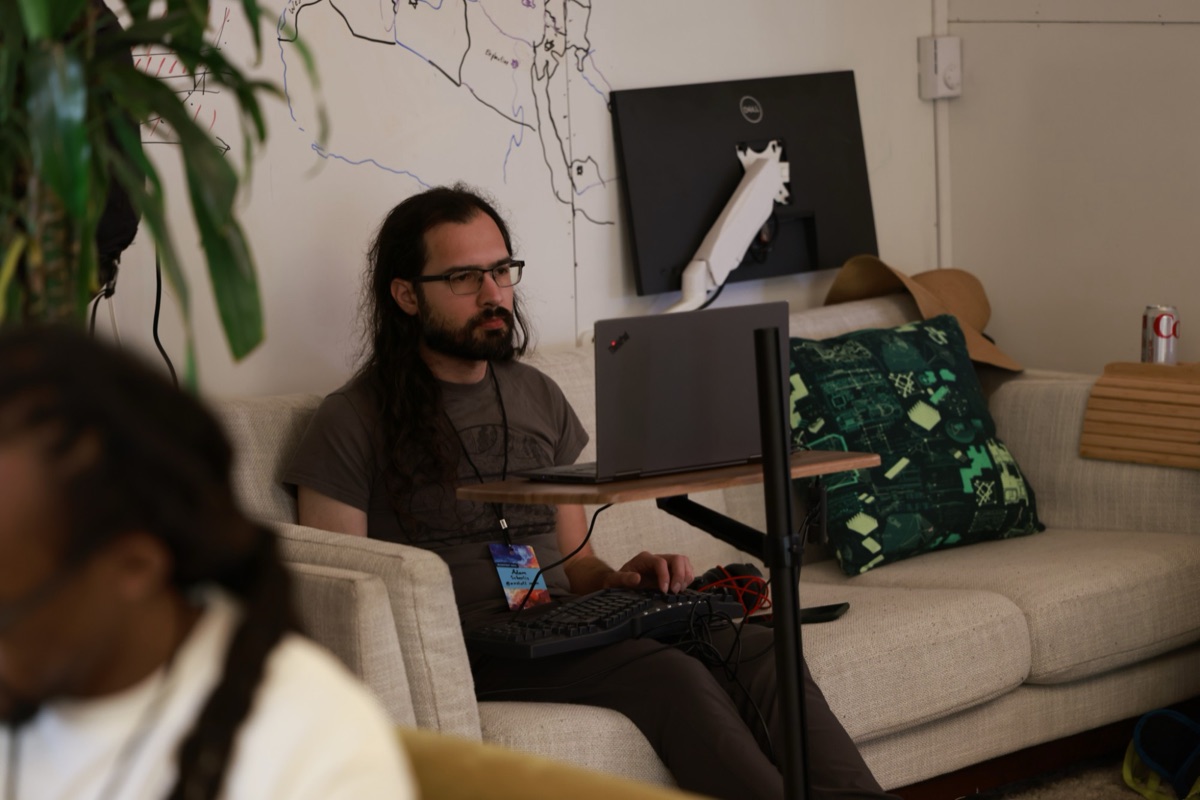
I wrote a piece about running better online events here. Priya Parker said it was “a brilliant piece on how to share power on Zoom by hacking the system”.
“Every year our company has a gathering of our vice presidents - currently around 170 people in total…I wanted to use the retreat as an intentional step toward greater connection, part of a longer journey toward greater cohesion and effectiveness, with the ultimate goal of serving our clients better. Making changes to the retreat...meant stepping out of our comfort zones...The end result was a great success: many of even our most skeptical participants found the retreat effective and impactful...and we’re seeing lasting impact on collaboration at our firm”

Lots of the things conferences do are worse than doing nothing.
Read on Substack
Level 1: get people together, create obstacles to connection. Level 2: get out of the way, to allow serendipitous connection. Level 3: intentionally design for the connections you want to create.
Read on Substack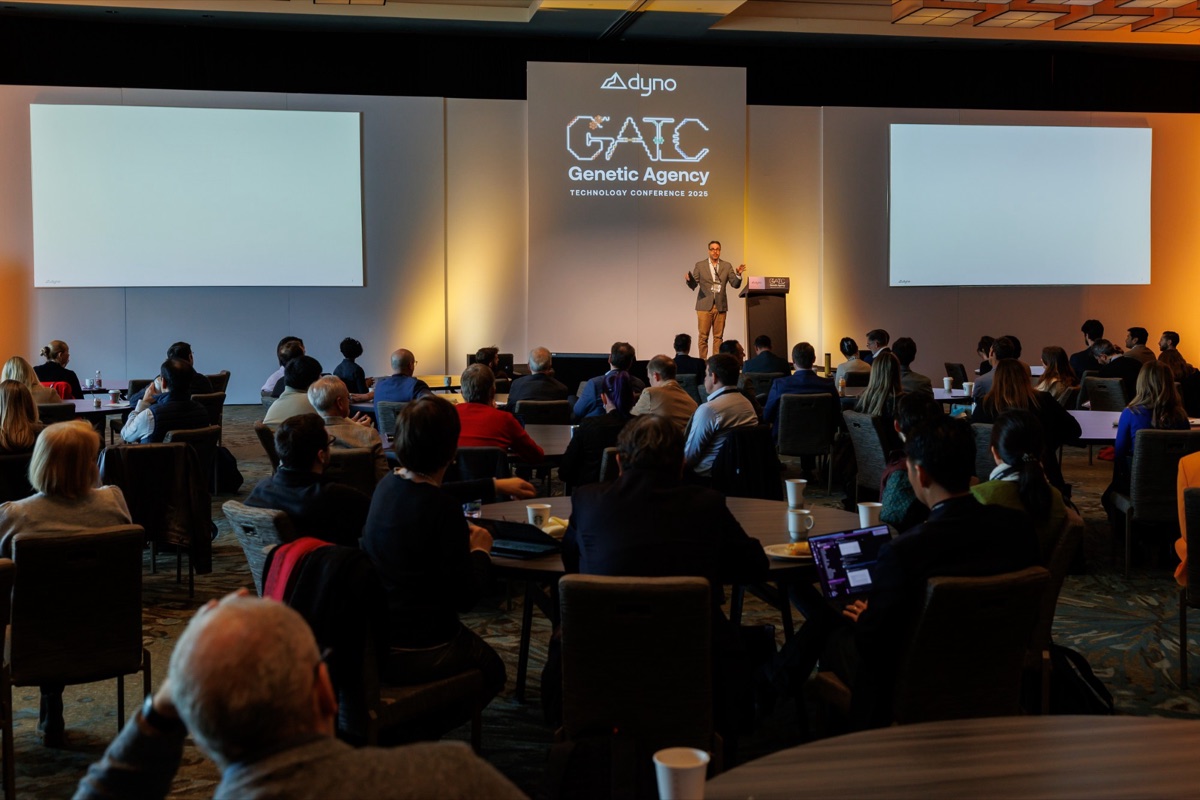
If you run a forgettable conference, nobody blames you. Doing something different feels risky.
Read on SubstackThese calls are often fun and interesting for both of us, even if we don’t end up working together.